
2K, Multi-Component & Overmolding Services
We combine colors, materials and inserts in your custom parts, with design review, in-house tooling and a molding process tailored to your requirements.
Molding Options for Your Part
Start with what your finished part needs to do. We review the materials, geometry and production volume to select a suitable approach.
Three colors or more?
Send us your design, including each color and material region. We assess the molding sequence, tooling and equipment fit for three-color and other multi-component requirements before confirming the production route.
Multi-Component Parts We’ve Made
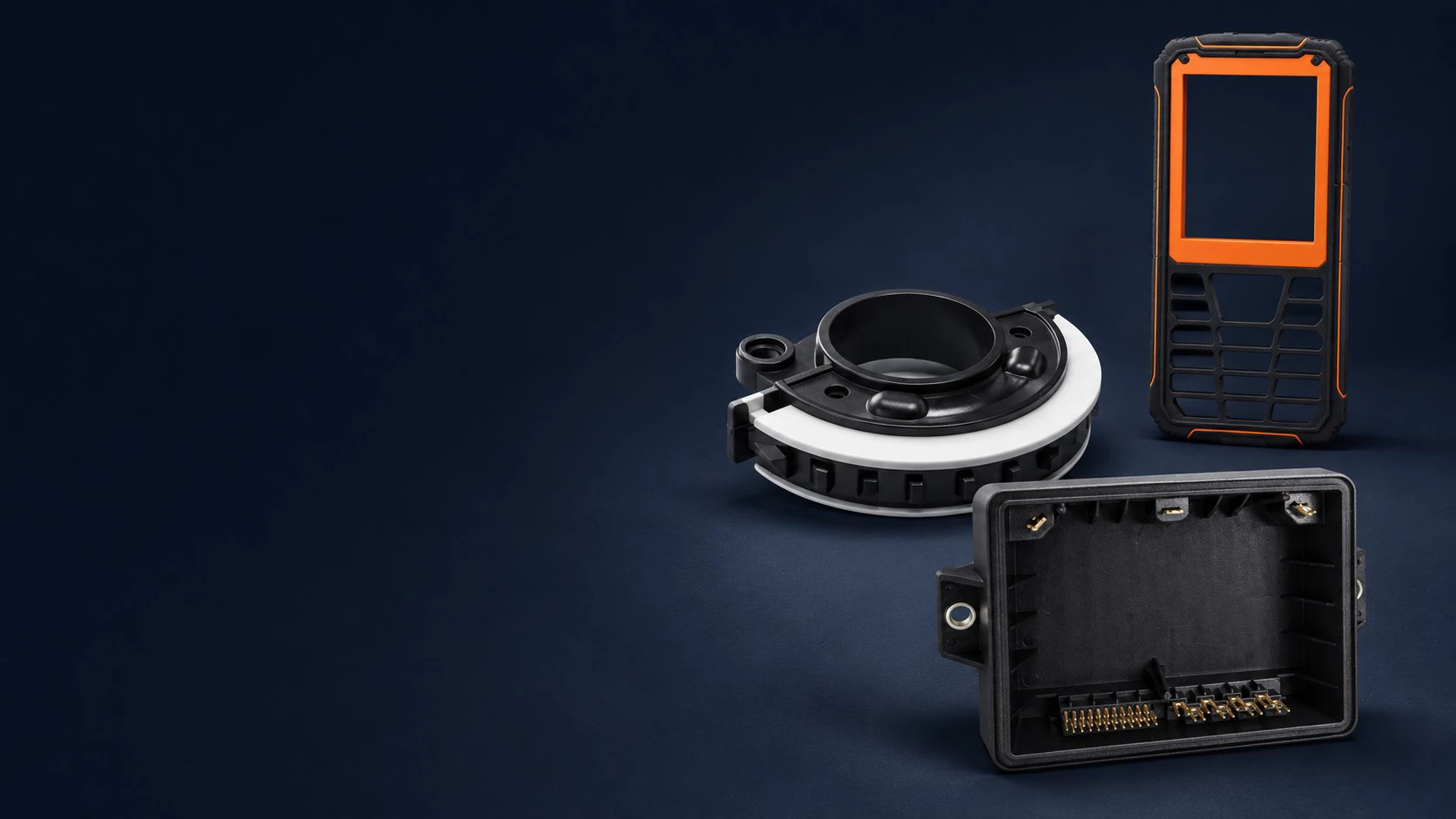
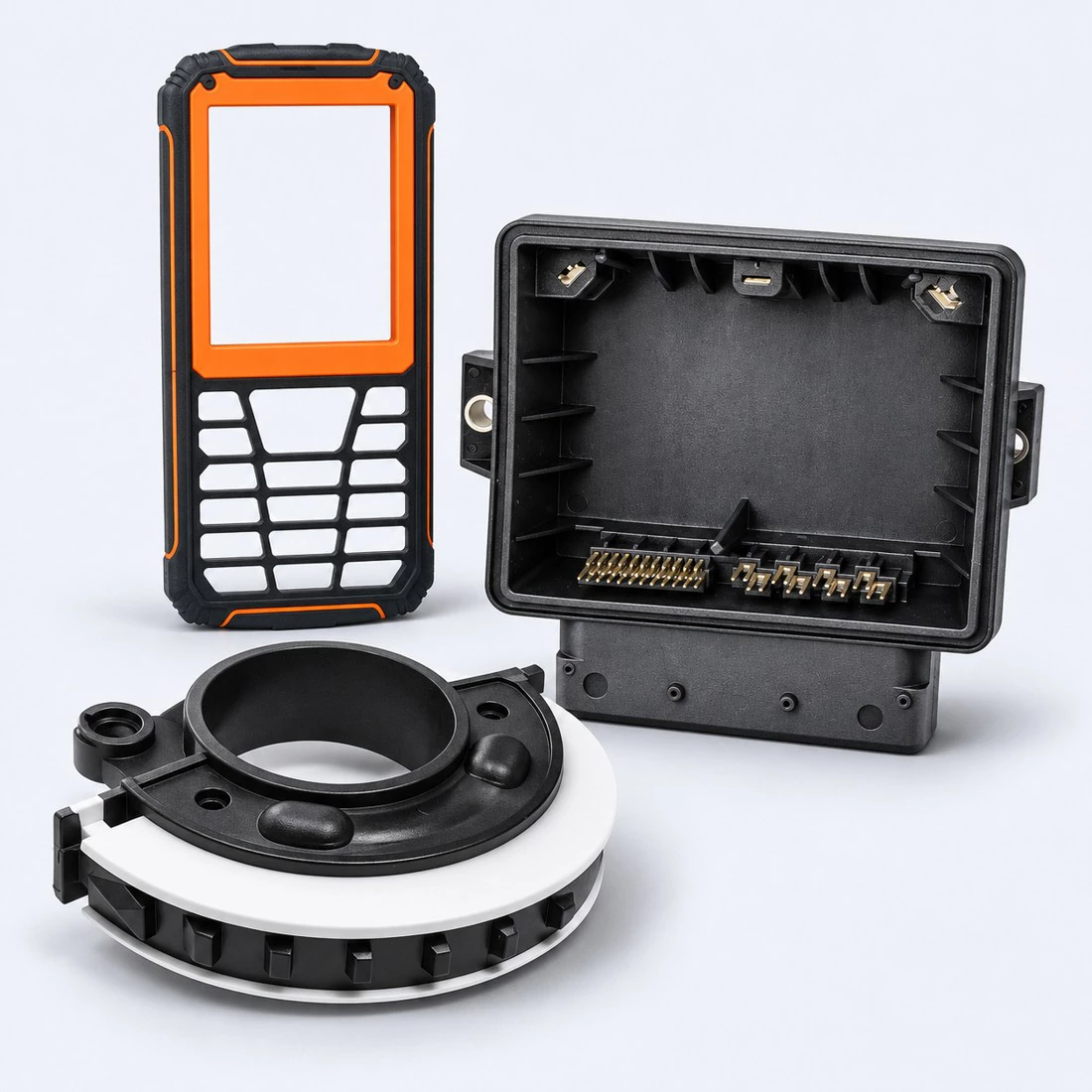
Examples from our two-color, overmolding and insert molding projects.
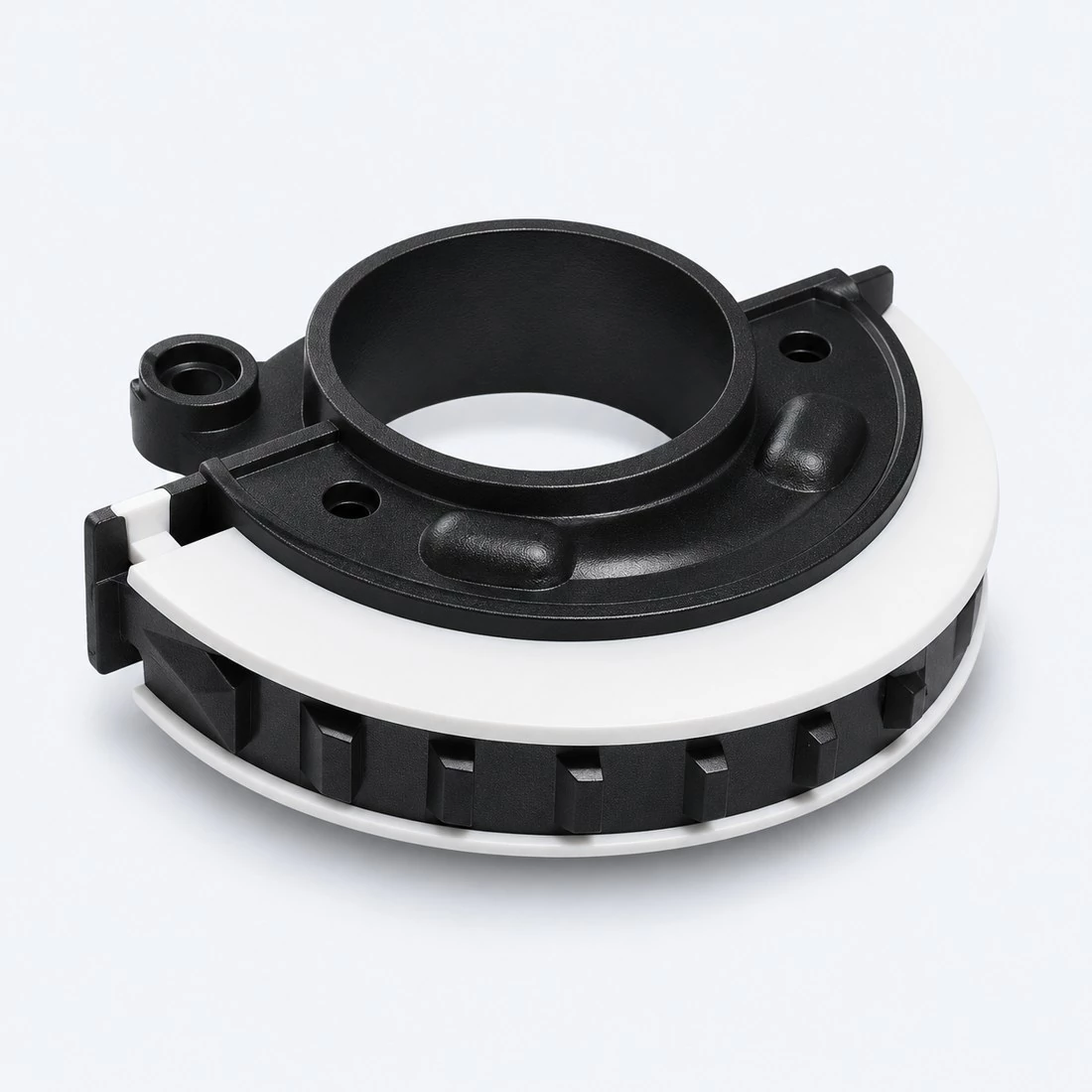
Two-color parts
Defined color regions in one molded component.
Overmolded parts
Additional material around a preformed body.
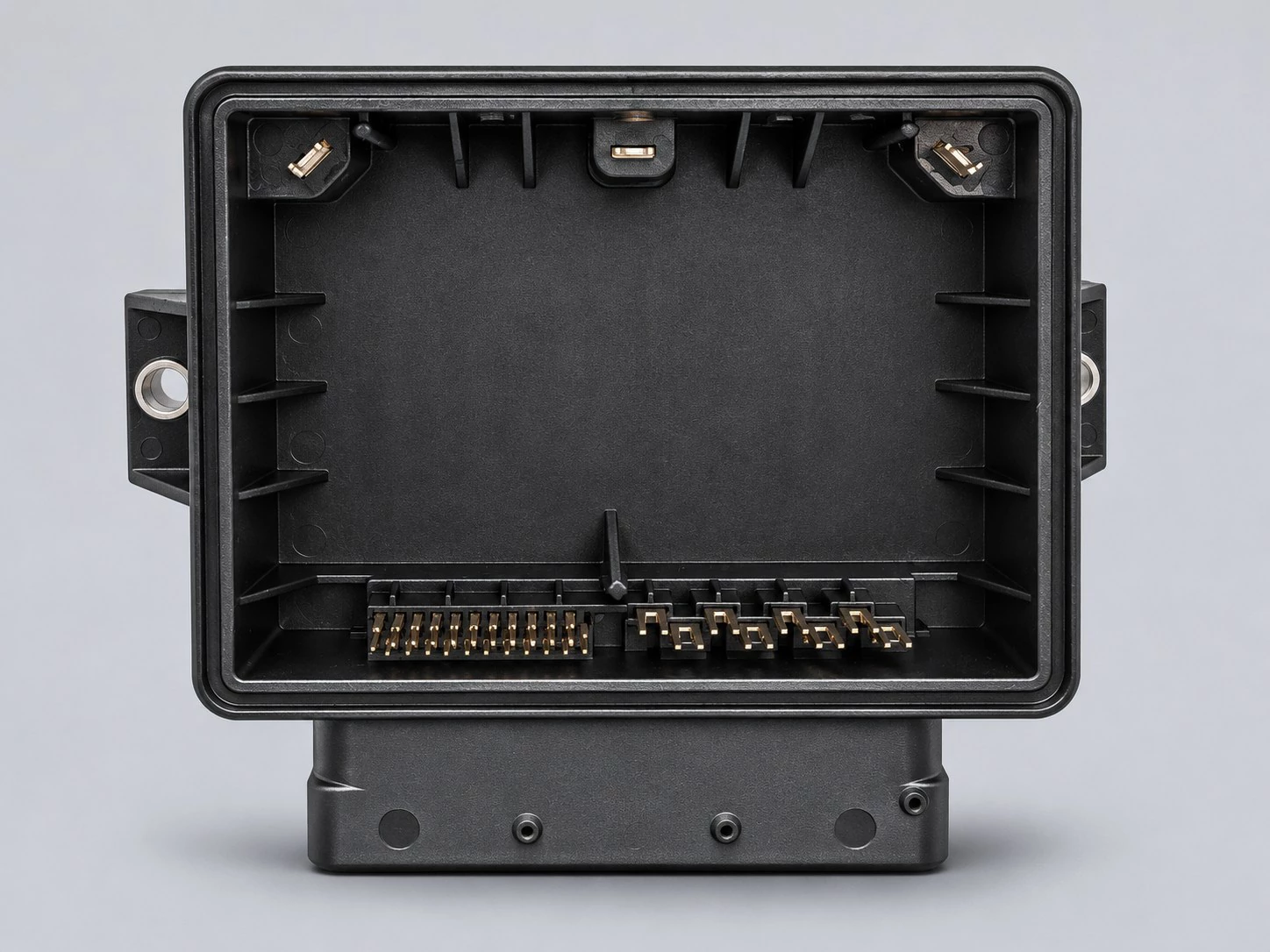
Insert-molded parts
Plastic combined with metal terminals or inserts.
Materials & Component Compatibility
Select the grades. Design the interface. Verify the finished part.
Material Selection
We use resin supplier data to select specific grades for your service conditions, including temperature, chemical exposure and hardness. A polymer name alone does not establish compatibility.
Interface & Retention
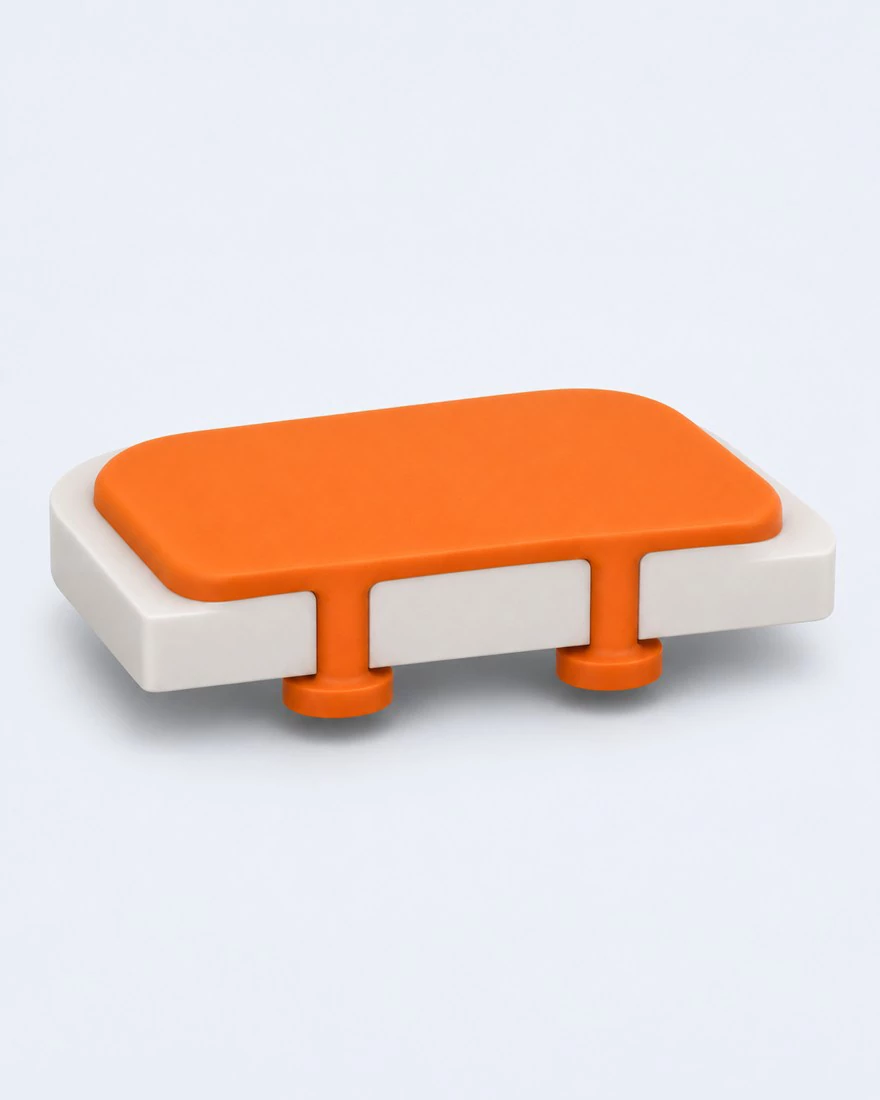
The interface may rely on material bonding, mechanical retention or both. The required holding force and available joining area guide how the components are connected.
Sample Verification
Trial samples are checked for appearance, component position and agreed retention or functional requirements before production approval.
Multi-Color Parts
Molded samples establish color references, boundary positions and visible surface standards.
Inserts & Preforms
Drawings define component dimensions, location and exposed areas. We agree incoming checks and supply responsibilities with you.
DFM & Tooling for Combined Components
We review the whole part, including the interfaces between its materials and components.
Map the Regions
We identify each material, color and insert region, together with the critical dimensions and visible surfaces on your drawing.
Review the Molding Sequence
The design review considers filling, support, positioning and transfer between stages. Tooling and equipment requirements follow the selected route.
Develop & Trial the Mold
After mold design approval, we build the production tooling and review trial parts with you. Sample results guide corrections before production approval.
Production Setup & Process Control
A repeatable production plan covers each material and each molding stage.
Materials & Inserts
We confirm resin grades, colors and insert specifications with you, including which materials and components each side will supply.
Mold & Equipment Fit
We review the mold layout, shot requirements and component handling against the available production setup. Existing tooling requires a separate transfer assessment.
Approved Conditions & Records
Trial approval establishes the agreed process and inspection checkpoints. Production records link material and component batches to finished parts.
Quality Checks for Your Finished Part
We agree what to measure and how to judge acceptance before production.
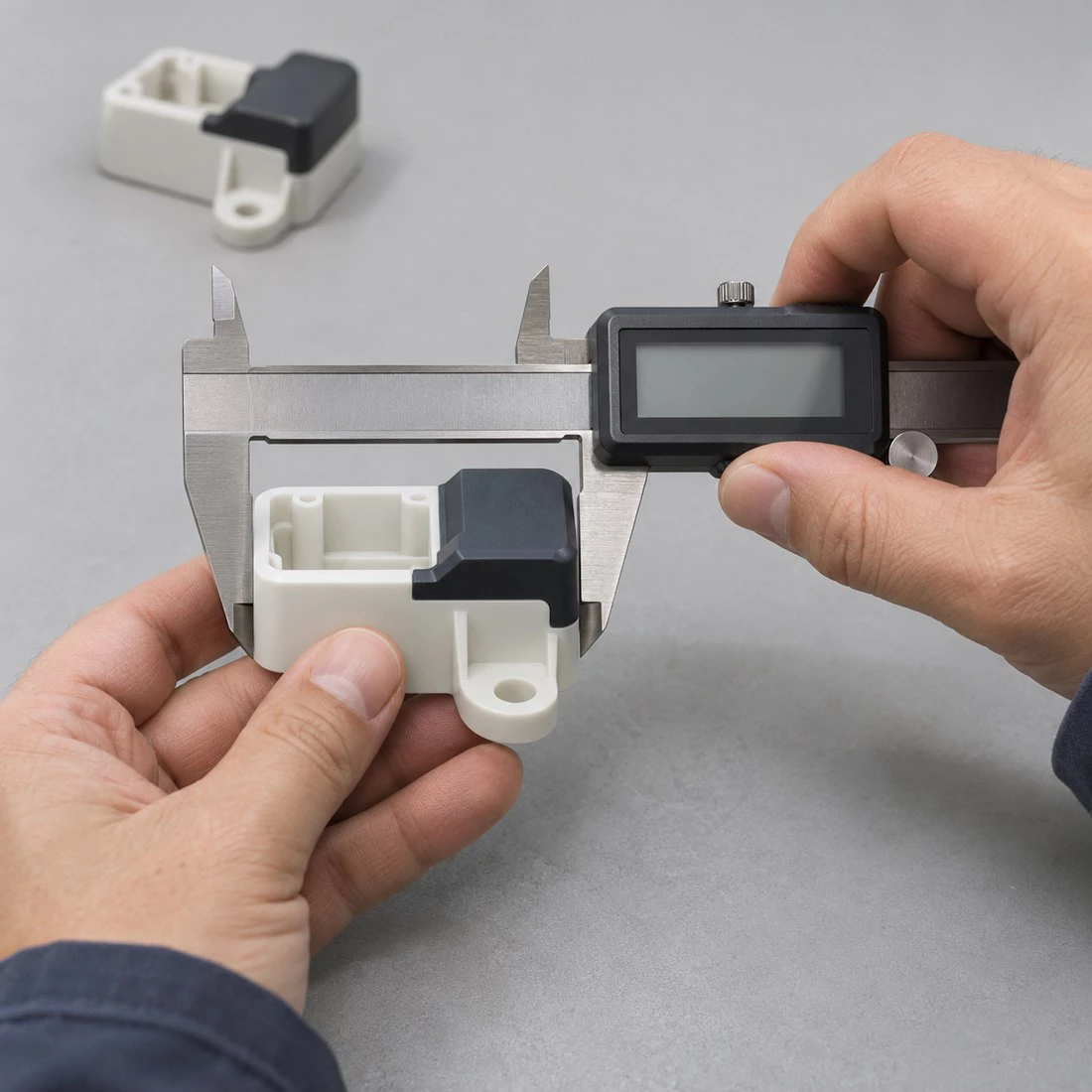
Dimensions & Insert Position
We check critical dimensions, alignment between molded regions and insert or terminal positions against your drawing.
Appearance & Color Boundaries
We compare parts with approved samples for color, finish, visible boundaries, flash and complete molding.
Retention & Function
Bonding, retention, assembly or sealing checks follow the methods and acceptance limits agreed for your application.
Batch identification and agreed inspection records help your team verify the parts received.
Your Multi-Component Molding Project
From design review to repeat orders, each stage has a clear approval basis.
Project Review
Share drawings, color and material regions, insert details and expected quantities. We confirm the project scope and information needed for a quotation.
DFM & Tooling
We review the interfaces and molding route, then develop new tooling or assess an existing mold. You review the DFM findings and mold design.
Trials & Approval
We mold samples and check dimensions, appearance and agreed functions. You review the samples and results before production approval.
Production & Delivery
We run the approved process, inspect and pack the parts, and provide the agreed batch identification and supporting records.
Start Your Multi-Component Molding Project
Send your drawings, material and color regions, insert details and expected quantities. Include any bonding, appearance or functional requirements.
Multi-Component Molding FAQs
Can you review parts with three or more colors or materials?
Yes. Share the drawing with each color and material region identified. We review the sequence, mold concept and equipment fit before confirming feasibility and the production route.
How do 2K molding, overmolding and insert molding differ?
2K refers to two-component molding. Overmolding adds material around a preformed part; insert molding incorporates a positioned component into a molded part. These descriptions can overlap. We assess the actual part and process rather than rely on the label alone.
Can I supply the preforms or metal inserts?
Tell us which components you plan to supply. We review their drawings, tolerances, condition, quantities and packaging, then agree incoming checks and supply responsibilities.
Will the materials bond together?
Bonding depends on the specific grades, surface condition, design and processing. Some parts also use mechanical retention. We agree the interface requirements and how they will be checked on trial samples.
Can you use an existing multi-component mold?
We review the mold design, condition, machine interfaces and previous process records. Any changes, trials and acceptance checks are agreed before production transfer.
What affects cost and lead time?
The number of materials and stages, tooling complexity, insert handling, cycle time, order quantity and inspection requirements all affect the quotation. Share your target volume and delivery date so we can review the complete scope.