
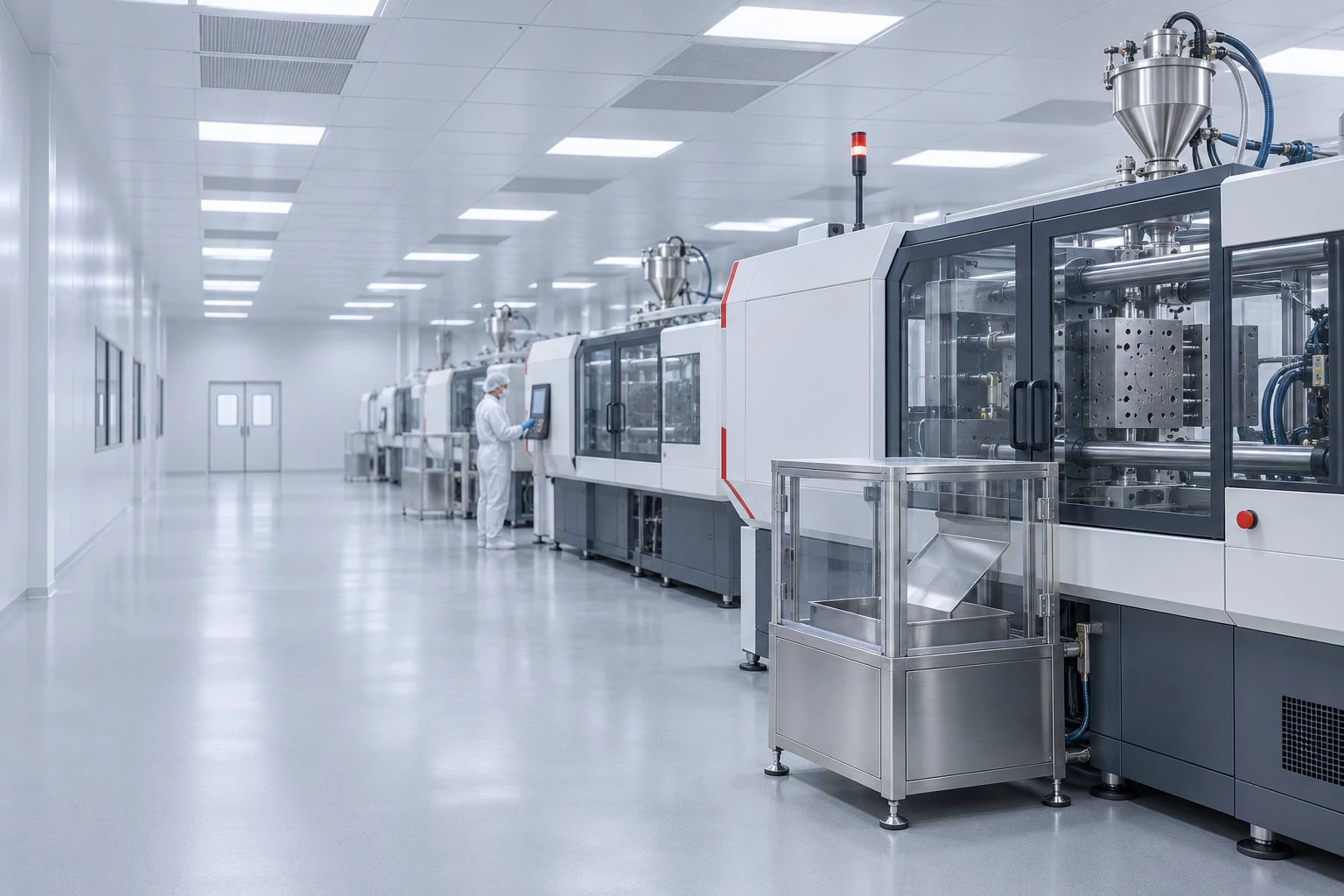
ISO Class 8 Cleanroom
Injection Molding Services
Manufacture custom plastic parts in our ISO Class 8 cleanroom—with in-house DFM, production tooling and inspection. Part handling and packaging based on your project requirements.
Why Cleanroom Injection Molding?
For contamination-sensitive parts, dimensions and appearance are only part of the requirement. The production environment matters, too.
Reduce Contamination Risk
A controlled environment helps limit exposure to airborne particles during molding and handling.
Protect Critical Features
Sealing surfaces, transparent areas and small fluid paths may need tighter control of particulate contamination.
Prepare for the Next Step
Align part cleanliness with downstream assembly, cleaning and packaging requirements.
Custom Parts with
Cleanliness Requirements
Your part’s application determines its material and cleanliness requirements.
Medical Plastic Components
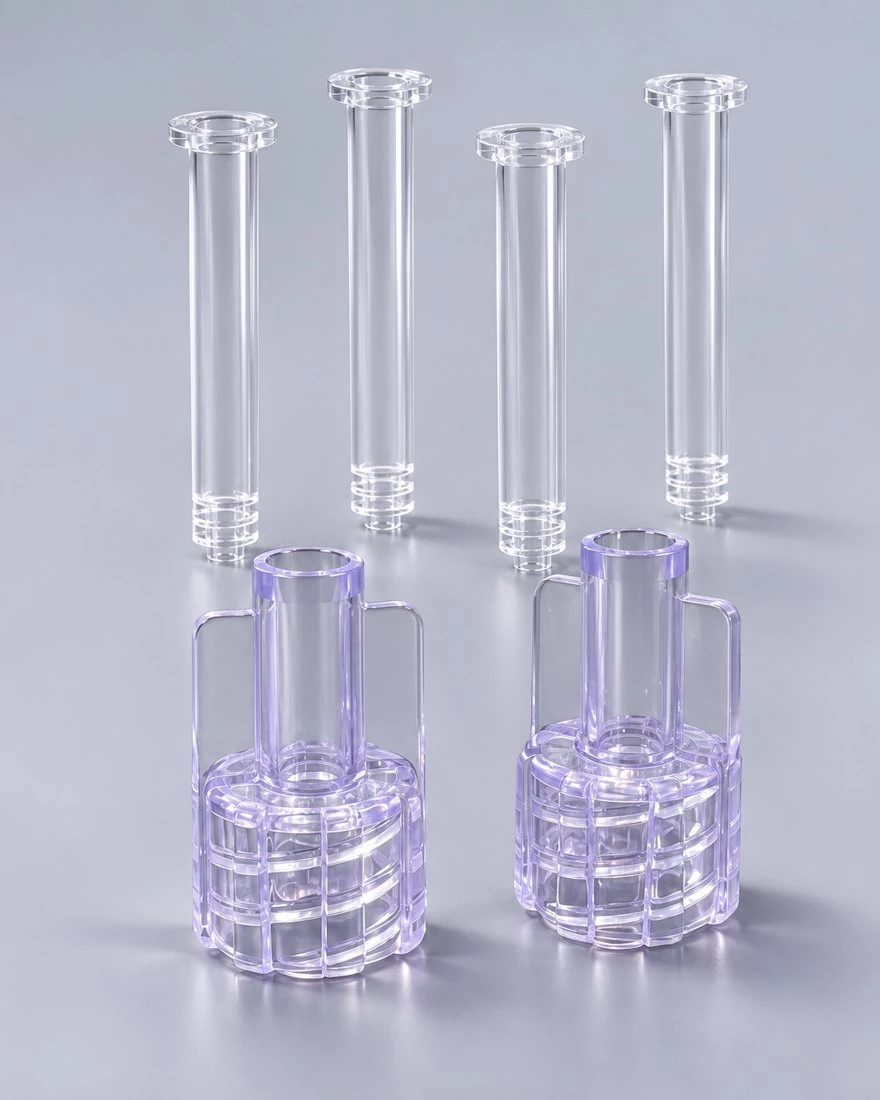
Connectors, caps and device components. Define the contact surfaces, inspection and documentation your project needs.
Diagnostic & Laboratory Components
Transparent parts, containers and fluid-handling components. Share your optical, sealing and cleanliness requirements.
Other Contamination-Sensitive Parts
Tell us where particles could affect function or assembly. We review the part, material and production scope together.
Our ISO Class 8 Cleanroom
& Production Scope
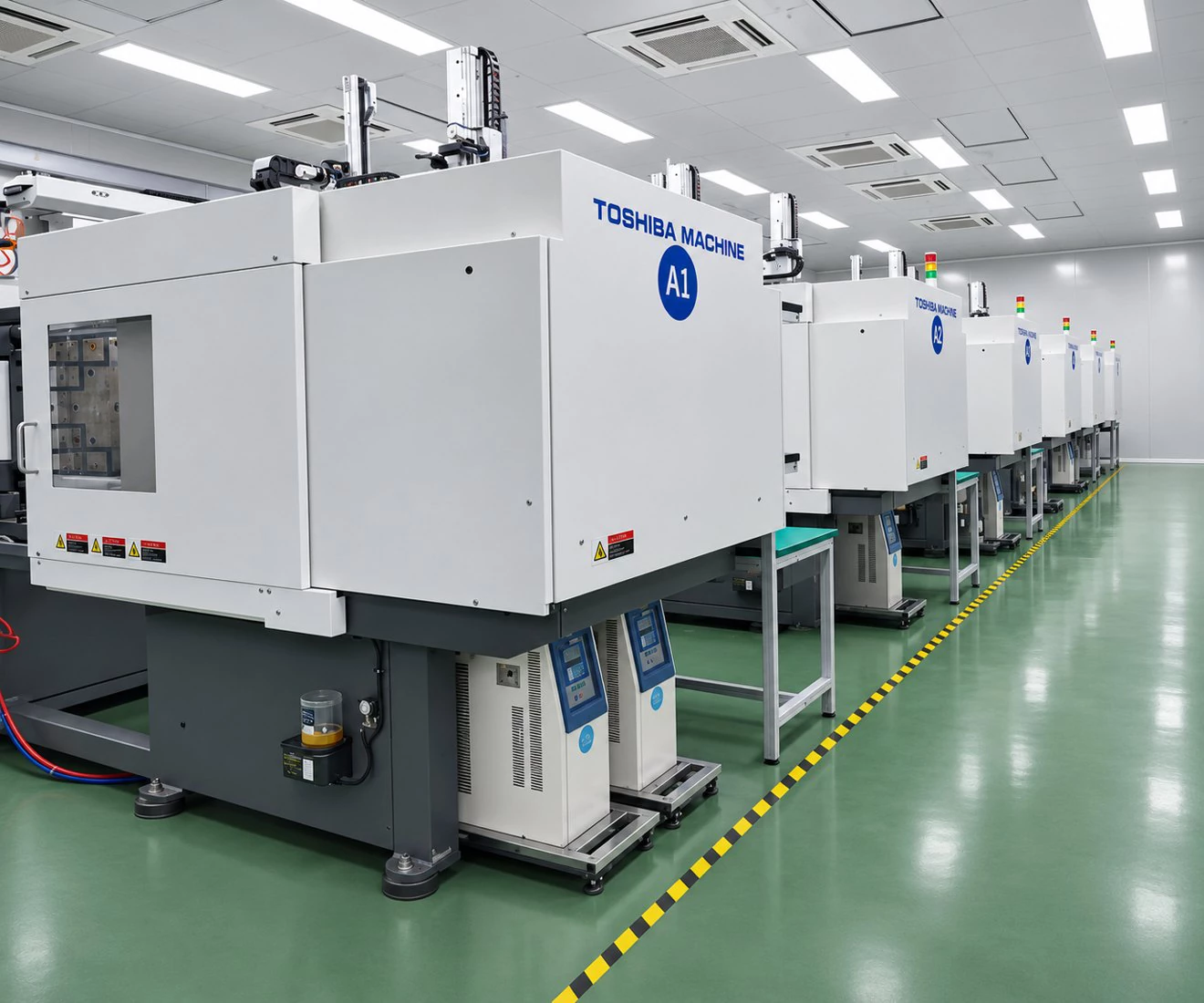
Our ISO Class 8 cleanroom supports injection molding for contamination-sensitive plastic parts.
Cleanroom Injection Molding
We review the mold, resin and shot size against the cleanroom production setup.
Part Handling & Packaging
We plan part removal from the mold, inspection, temporary storage, packaging and transfer between areas based on each project’s cleanliness requirements.
Quality Documentation
Agreed inspection reports and batch records support part acceptance and traceability.
Cleanroom molding does not make parts sterile. Sterilization and microbiological requirements need a separate, agreed scope.
Contamination Control Throughout Production
We control how people, materials and equipment come into contact with your parts.
Personnel & Access
Personnel follow gowning and entry procedures and avoid unnecessary contact with parts.
Material Transfer
Resin, packaging and containers enter through controlled transfer procedures. Open materials are kept covered.
Equipment & Tooling
Molds, equipment and part-contact surfaces are cleaned before production and during changeovers.
Part Handling & Environment
Parts are collected in clean containers and protected during storage and transfer. Cleanroom conditions are monitored and recorded.
Materials for Your Application
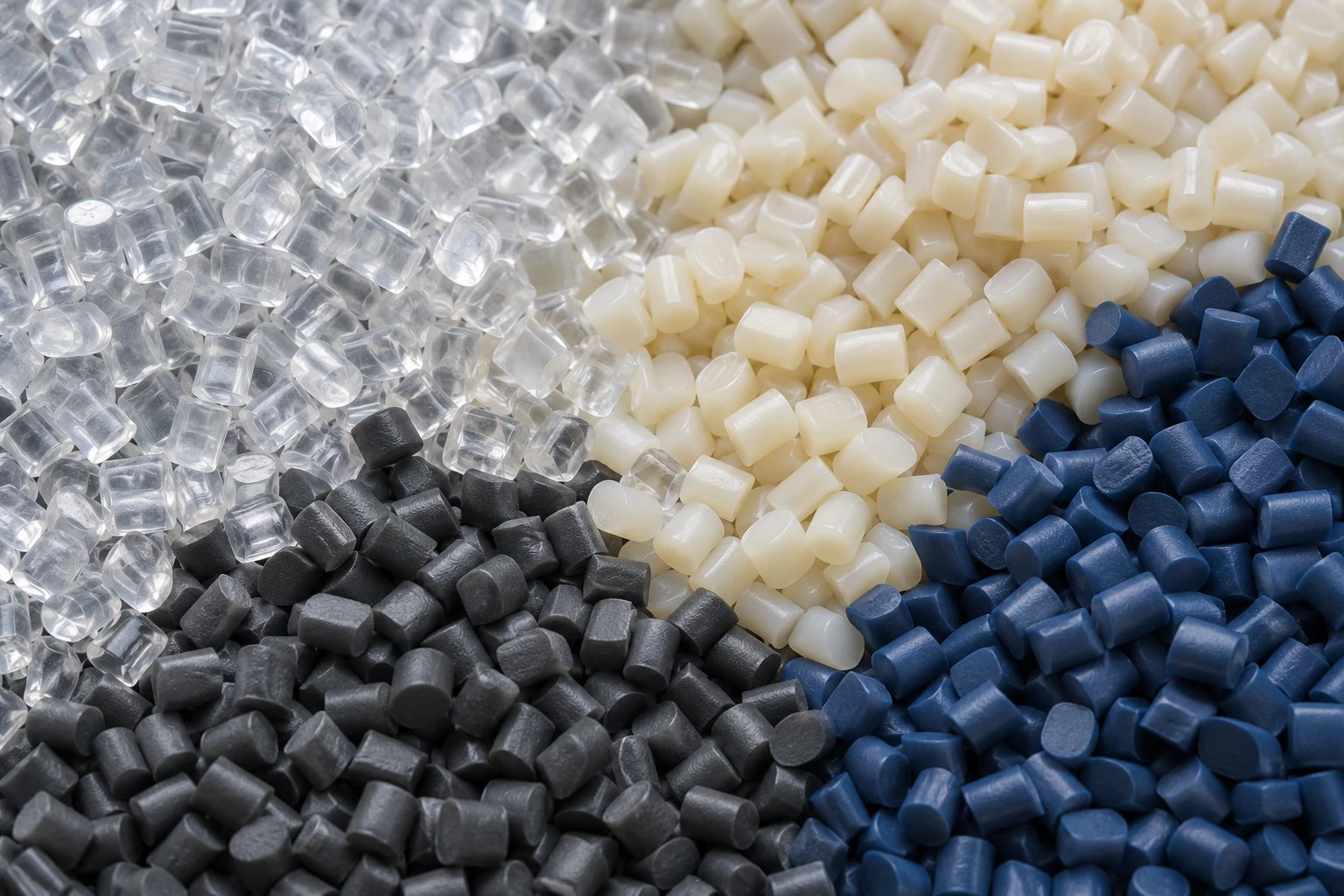
Choose the resin grade for the part’s use, processing needs and required documentation.
Specified or Customer-Supplied Resin
Specify the grade for sourcing, or supply your own resin. We check material identification and agreed documents.
Grade & Application Review
Share your chemical exposure, transparency and any downstream sterilization requirements with us. We use supplier data to help assess a suitable grade.
Listed polymers are material references. Cleanroom suitability and any medical-grade documentation are confirmed for the specific grade and project.
Quality, Validation & Traceability
Before production, we agree with you on inspection items, test methods and the records you will receive.
Part Inspection
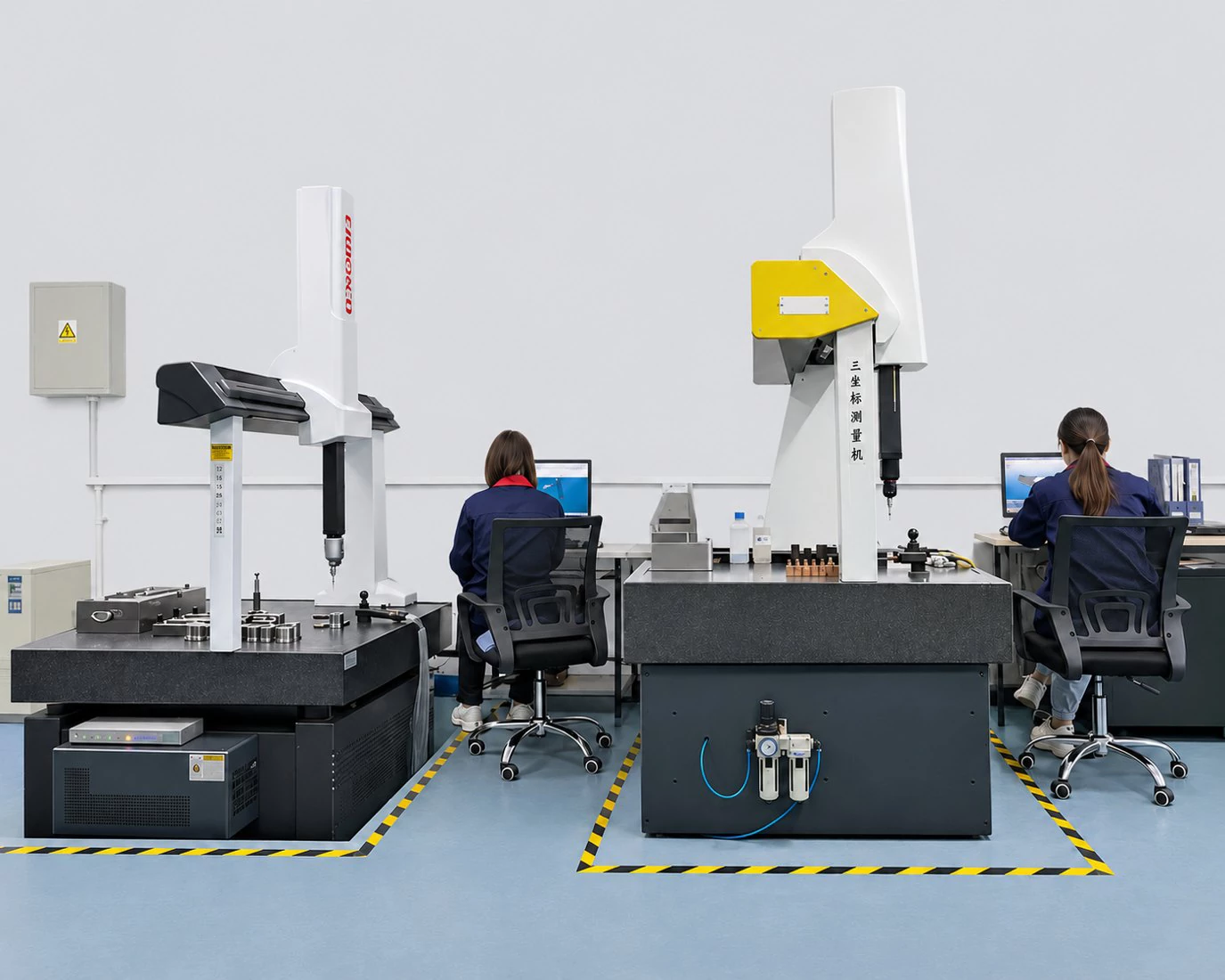
We check dimensions, appearance and agreed functions against your drawing and approved samples.
Cleanliness Acceptance
Share your particle, residue or microbiological requirements. We agree on test methods and who performs the tests before production.
Batch Traceability
Batch records connect resin lots, production batches, inspection results and packaging labels.
Validation Support
At quotation, we agree on FAI, capability studies and IQ/OQ/PQ support, including required reports and who performs each activity.
Controlled Handling & Packaging
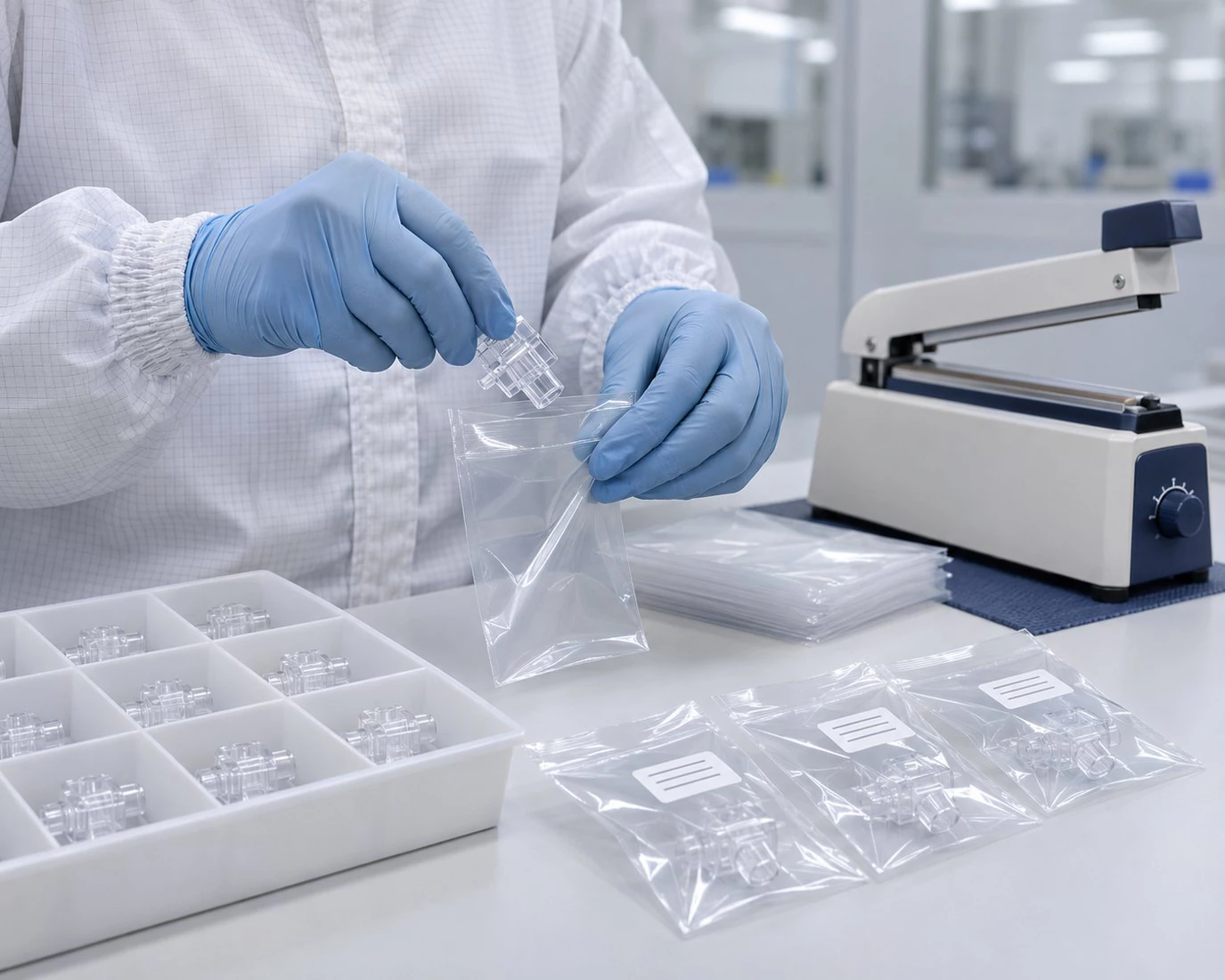
We plan how parts stay protected after molding and through delivery.
Limit Part Contact
We agree with you on collection, separation and temporary storage methods to protect critical surfaces.
Define the Packaging
We confirm pack quantity, packaging material, sealing method and packing location with you, including double-bagging if required.
Identify Every Batch
Part numbers, batch labels and agreed documents help your receiving team identify and verify each shipment.
Your Cleanroom Injection Molding Process
For new tooling or mold transfer, we start with your part and cleanliness requirements.
Review Requirements
Share your drawings, resin, quantities, critical features and cleanliness requirements with us.
DFM & Tooling
We review manufacturability, then develop a production mold or assess an existing mold for transfer.
Trials & Approval
We review samples, inspection results and agreed validation work with you before production approval.
Production & Delivery
We mold, inspect and pack the parts, prepare batch records and arrange the agreed shipment.
Start Your Cleanroom Molding Project
Send your drawings, resin, volume and cleanliness requirements for a DFM review and quotation.
Cleanroom Injection Molding FAQs
What is cleanroom injection molding?
It is plastic injection molding within a controlled environment designed to limit airborne particulate contamination. The handling and packaging operations included depend on the agreed project scope.
Do you offer ISO Class 8 cleanroom injection molding?
Yes. Flymould has an ISO Class 8 cleanroom for injection molding. Share your part drawings and cleanliness requirements so we can confirm the molding, handling and packaging scope for your project.
Is cleanroom molding the same as sterile injection molding?
No. A cleanroom classification does not establish that parts are sterile. Sterilization, bioburden and other microbiological requirements must be separately defined and confirmed.
Which materials can be used for medical cleanroom injection molding?
The grade depends on the part’s intended use, processing and downstream requirements. Share your specified resin or required properties, along with any material documentation or sterilization compatibility requirements.
Can an existing injection mold be transferred for cleanroom production?
We assess mold condition, machine fit, cleaning needs and available process records. Trials and any required validation are agreed before repeat production.
What affects the cost and lead time of cleanroom molded parts?
Resin, mold complexity, cycle time and quantity affect the base cost. Cleanliness requirements, validation, testing and packaging add project-specific work. Share your target dates so these activities can be included in the quotation.