
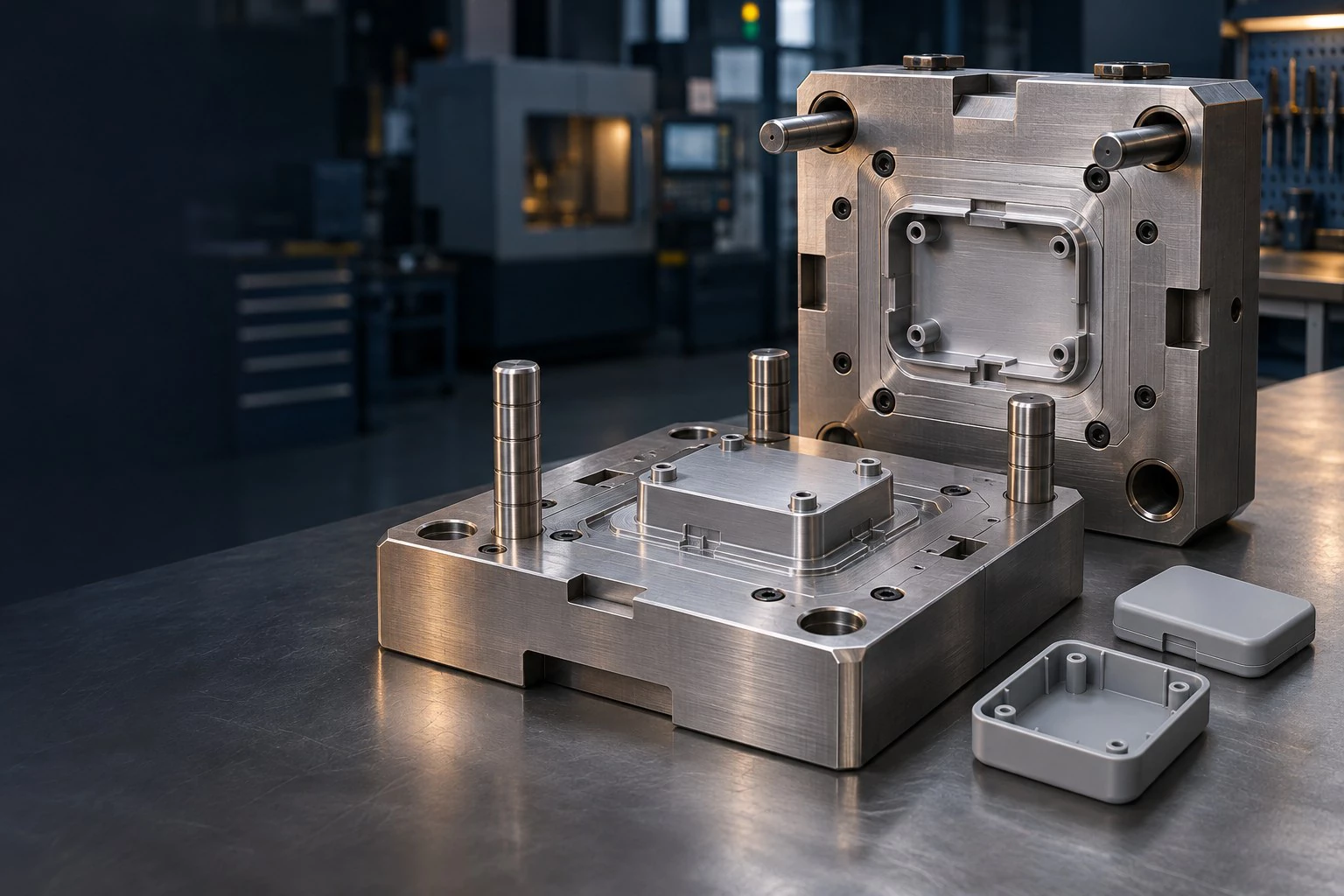
Production Mold Development
We design and build production molds in-house for the custom injection-molded parts we produce. Your part, resin and volume requirements guide mold development, trials and sample approval before production at Flymould.
Tooling Built Around Your Production Needs
Your production plan helps determine the mold investment, cavity layout and requirements to verify during trials.
Part & Material
Your current model, drawing and resin grade guide the mold concept. Critical dimensions, sealing features and mating parts identify where sample checks need to focus.
Volume & Capacity
Initial order quantities and expected repeat demand guide cavity count and automation discussions. We consider the planned press and output needs alongside tooling cost.
Appearance & Function
Visible surfaces, permitted gate and ejector marks, texture and assembly needs inform the mold layout and sample acceptance criteria.
Development Stage
Tell us which requirements are settled and which remain open. Proposed part changes are reviewed with you before the affected mold work proceeds.
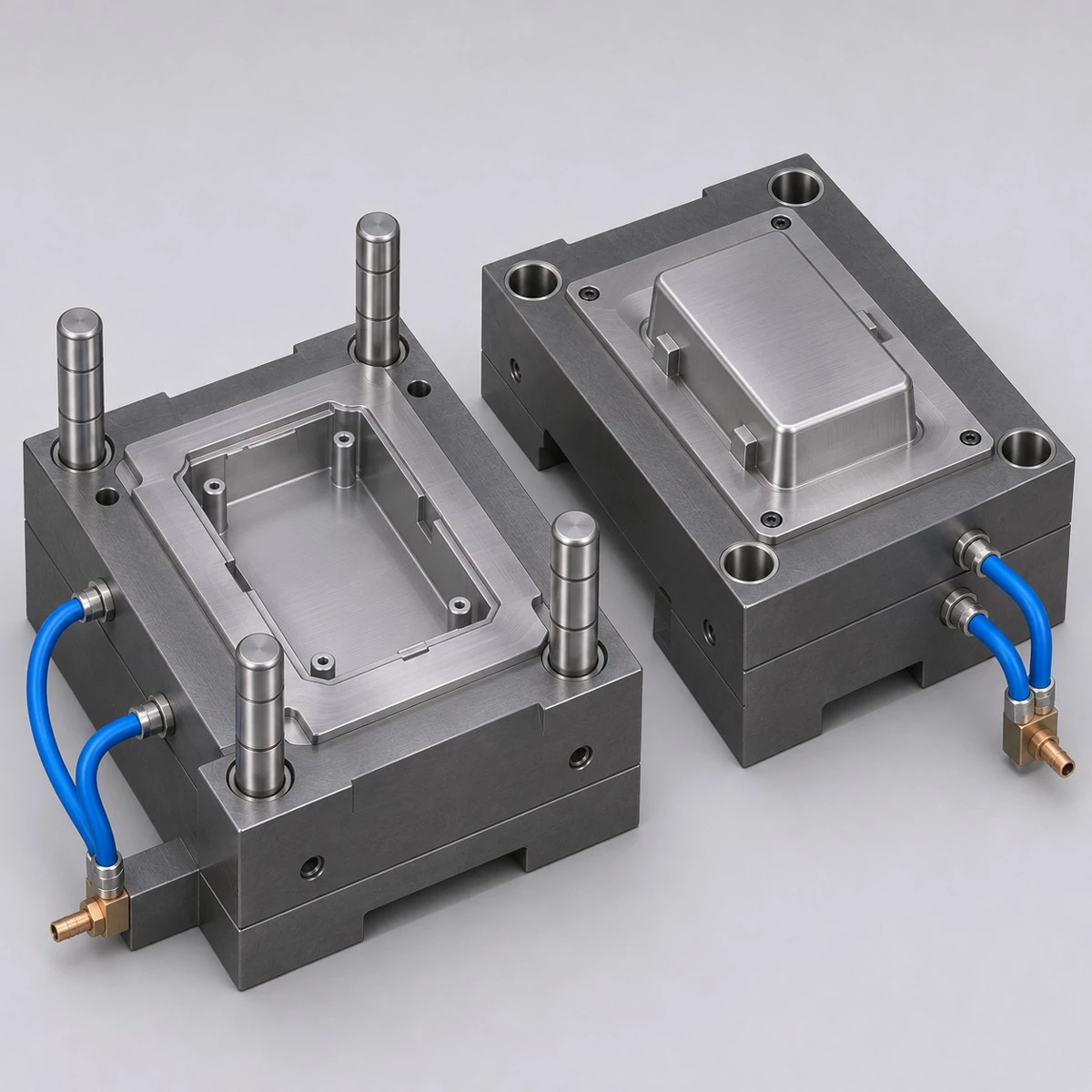
Production Mold Design
We develop the mold arrangement around the agreed part revision, resin and production requirements. Key design choices are reviewed with you before manufacture.
Cavities, Gates & Runners
Cavity count and layout are considered with shot size, press fit and expected demand. Gate position and runner selection account for filling, visible marks and material use.
Cooling, Ejection & Moving Features
Cooling circuits, ejection, slides and lifters are arranged around the part geometry. The review considers part release, distortion risks and access for maintenance.
Steel, Inserts & Wear Areas
Steel and insert choices follow the resin, surface finish and expected tool use. We discuss replaceable wear areas and service access where the design requires them.
In-House Mold Manufacturing
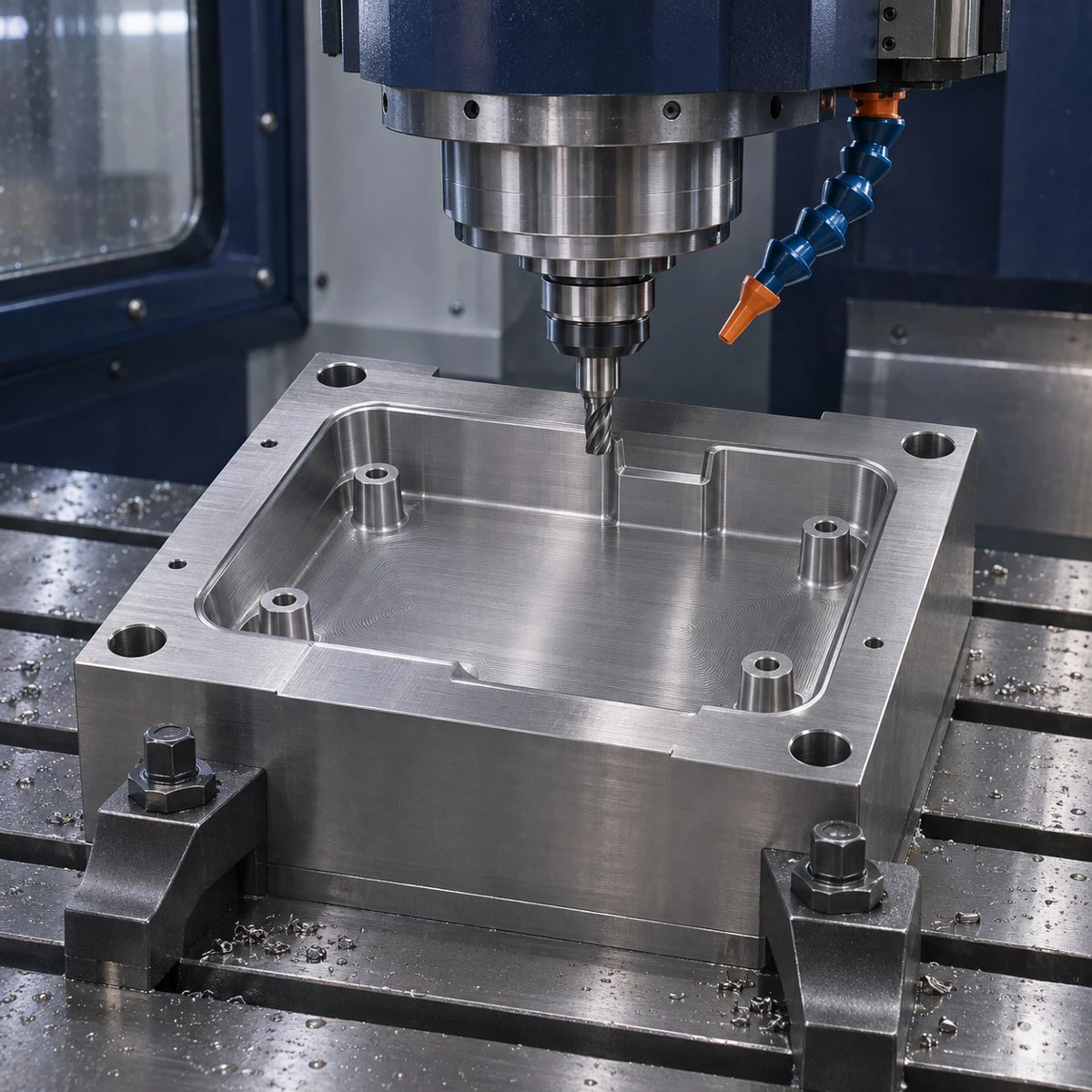
Our in-house toolroom combines CNC machining, EDM, wire cutting and mold assembly to build the tooling used in our injection molding production.
Machine the Mold Components
Mold bases, cores, cavities and inserts are prepared using the appropriate machining operations for their geometry and finish requirements.
Fit & Assemble the Tool
Fitting and assembly bring together the parting surfaces, moving components, ejection and cooling connections. The assembled tool is checked before trial installation.
Carry Findings Back to the Toolroom
Trial findings are linked to the affected tooling features. Required machining, fitting or finishing work is reviewed before the next sample check.
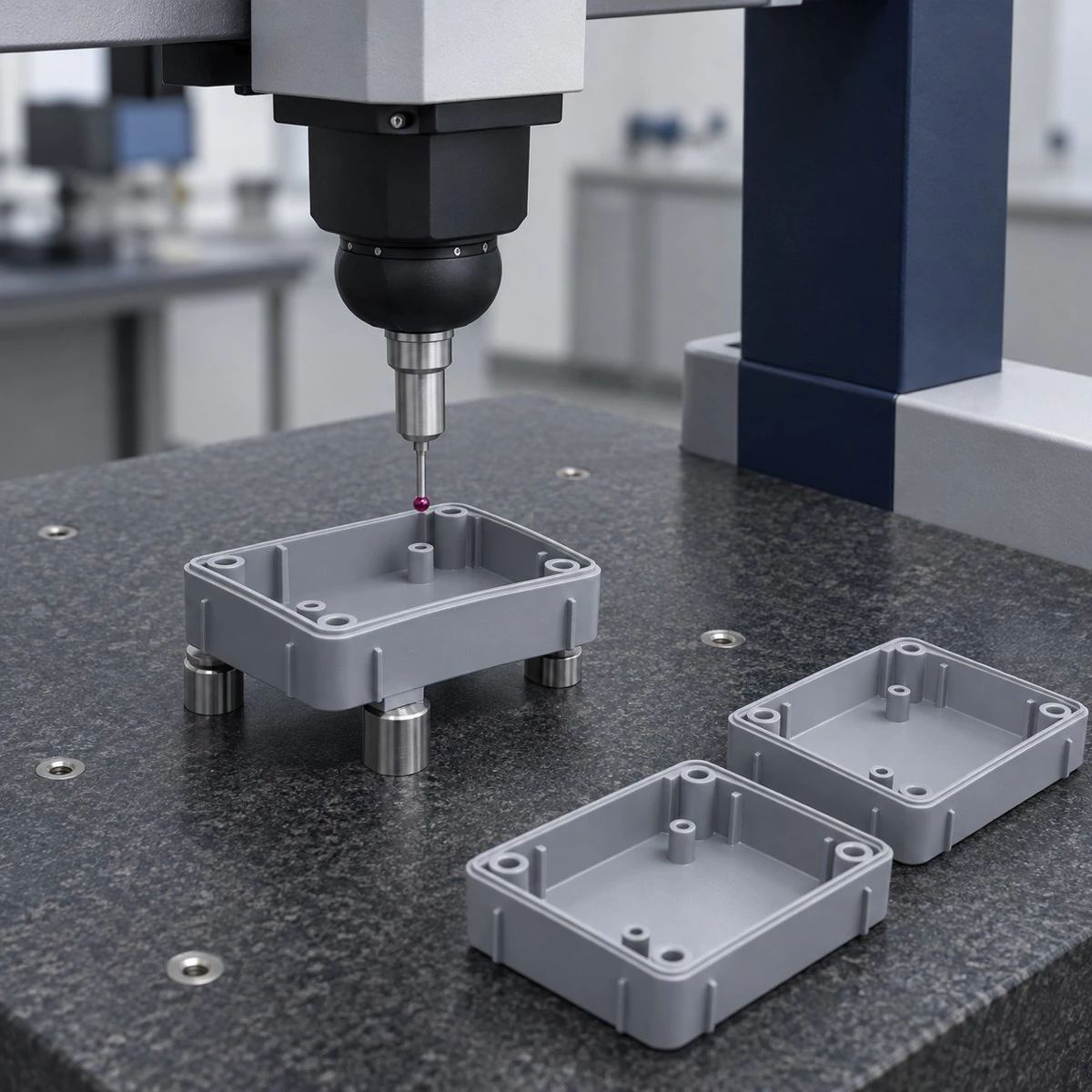
Mold Trials & Sample Verification
The first trial provides parts to evaluate and findings to resolve. Sample approval follows the agreed drawing, appearance references and functional checks.
Evaluate the Molded Parts
We review filling, flash, part release, visible marks and deformation. Multi-cavity projects include cavity identification so findings can be traced to the relevant position.
Measure What Matters
Critical dimensions are checked against the agreed drawing revision using suitable measurement methods. Appearance and fit are reviewed against the agreed references and mating parts.
Correct, Resample & Confirm
Open issues identify the affected feature and proposed action. After process adjustments or approved tool changes, affected requirements are rechecked and samples submitted for your review.
From Approved Samples to Production
Approved samples establish the reference for injection-molded part production at Flymould. The agreed records, setup information and maintenance arrangements support the first production run and repeat orders.
Keep the Approved Reference
The agreed drawing revision, approved samples and inspection requirements form the reference for production. Remaining actions and any conditional approvals are recorded.
Prepare the Production Setup
We prepare the mold and agreed setup information for our production press. Production checks follow the approved part requirements and order scope.
Plan Maintenance & Changes
Cleaning, lubrication and wear checks follow tool condition and use. Proposed repairs or design changes are reviewed for their effect on samples, cost and timing.
Production Mold Examples
Two reference configurations from our mold project material show how tooling is matched to different parts and cavity requirements.
Pressure Sensor Base
Resin: PC
Mold steel: 1.2083 ESR
The part drawing and assembly requirements guide dimensional and fit checks during sampling.
HDPE Plug Cap
Resin: HDPE
Mold steel: 1.2083
Cavity identification helps trace sample findings and compare features across cavity positions.
Reference mold configurations. These examples do not establish production output, tool-life guarantees or repeat-order results.
Your Mold Development Process
Clear review points connect the tooling work to your launch plan.
Requirements & Concept
We review the part, material and volumes with you. The agreed requirements establish the basis for the mold proposal.
Design Approval
You review the proposed mold arrangement and open decisions before the affected manufacture begins.
Build & Assemble
The approved design guides machining and fitting. Project updates identify progress and decisions that affect timing.
Trial & Refine
Samples and inspection findings guide adjustments and approved corrections. Affected features are checked again.
Approve & Produce
You review the sample submission. Following approval, we prepare for injection-molded part production against the agreed requirements.
For initial planning, allow approximately 4–6 weeks from mold design approval to the first trial for a conventional tool. Complexity, purchased components, finishing and workload can change this estimate. Corrections, further trials and your sample review are scheduled separately.
Discuss Your Part Production
Send your part drawings, resin requirements, quantities and target timing. We will review mold development and injection-molded part production with you.
Production Mold Development FAQs
How long does production mold development take?
A conventional tool may be planned at approximately 4–6 weeks from design approval to the first trial. This is an initial planning estimate, not a confirmed delivery date. Tool complexity, components and workload affect the schedule; sample approval and further corrections require additional time.
How do you choose cavity count and mold steel?
We consider resin grade, part geometry, surface requirements, initial quantities and expected repeat demand. Cavity count also depends on press fit and shot size. The mold proposal sets out the selected arrangement and specifications for your review.
What happens if the first trial samples need changes?
We review the findings against the agreed requirements and identify whether process adjustments, tool corrections or part design changes are needed. The agreed actions guide further trials and checks. Changes to scope, cost or timing are discussed before implementation.
What samples and documents will I receive?
A typical submission includes trial samples and dimensional findings for the agreed features, together with open issues for your review. Sample quantity, cavity coverage, report format and any additional validation documents are agreed for the project.
Who owns the mold and where is it stored?
Mold ownership, payment conditions, storage location and release arrangements are specified in the tooling agreement. For molds used in our part production, the agreement also covers storage, maintenance responsibilities and any future transfer requirements.
Can the mold be modified after sample approval?
Share the revised drawing or model and the reason for the change. We review tooling feasibility and effects on existing features, inspection, cost and timing. Approved changes are followed by the relevant sample checks.
Do you support tool maintenance and repeat production?
Maintenance and repair arrangements follow the tooling and production agreement. The scope considers tool condition, wear, usage and replacement components. Repeat orders are reviewed against the approved part reference and current production requirements.
Can you take over an existing mold?
Yes, an existing mold can be reviewed for transfer and production. Share its drawings, condition, previous samples and production requirements so we can assess tool and press compatibility. This follows an existing-tool review rather than a new mold development program.